
Send Us An Email
Give us a call
Main: (703) 743-3056
Sales: (800) 674-2586
Support: (800) 674-9025

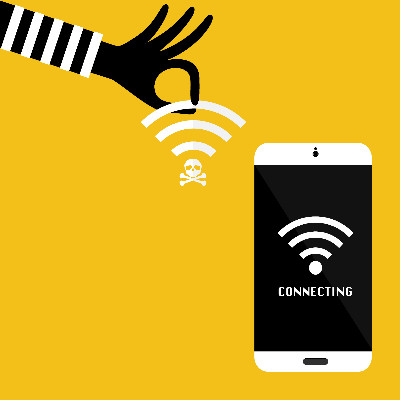
Connecting to a public Wi-Fi network is, at best, a roll of the dice, and more often than not, foolhardy and actively dangerous. Meant as a convenience, it is most convenient for someone trying to monitor your network traffic. These networks, maintained by a third party, are left wide open by design… making them in no way trustworthy, particularly for business purposes.

If you’re balancing office servers and cloud tools, it’s time to shift your focus. Managing IT isn't just about the physical hardware anymore; it’s about making sure your team can actually do their jobs. The goal is to maximize the value of the technology you’ve already bought while ensuring the system stays fast and reliable from anywhere. When you mix private servers with public cloud services, you’re building a bridge that needs to be easy for your employees to cross but impossible for hackers to break into.
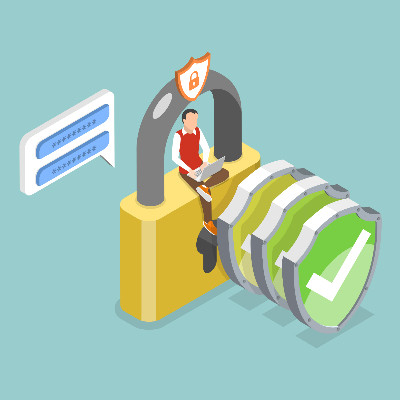
Checking a box on an insurance application used to be enough to get your business covered. Not anymore. Since cybercriminals have caused significant problems over the last few years, insurance companies are aggressively altering their rules to protect their own finances.

Most “Acceptable Use Policies” are relics of the 1990s—ten-page legal documents filled with all kinds of “thou shalt nots” that employees sign once and immediately forget. Modern business requires a different approach. A lockdown policy drives your best talent toward implementing shadow IT solutions, or unapproved apps, and it creates a culture of resentment that ultimately holds your business back.
Standard antivirus is no longer sufficient. A single compromised laptop or workstation can provide a gateway for ransomware to paralyze your entire organization. Small-to-medium-sized businesses (SMBs) are increasingly targeted because they often lack the 24/7 monitoring needed to detect sophisticated lateral movement within their networks. Relying on reactive security measures puts your data, reputation, and financial stability at significant risk.
Let’s talk about how endpoint detection and response mitigates these risks.

Think of your digital security like your skincare routine or your gym habits: it is all about consistency over intensity. You don’t need a million-dollar setup to stay safe; you just need to stop leaving the metaphorical front door unlocked. Since the line between work life and real life is nonexistent these days, one weak password on a random app can give a hacker the keys to your entire company’s kingdom. You should spend the next seven days on this digital hygiene sprint because it is low-effort, high-reward, and honestly, you owe it to your future self.

Want to hear a secret? Despite all the buzzwords and jargon, cybersecurity has a pretty simple foundation… one that many professionals refer to as the CIA Triad (unrelated to the intelligence agency). Its three pillars—Confidentiality, Integrity, and Availability—serve as the three critical sides of the cybersecurity triangle. If any fail, the whole of your systems are at risk.
Let’s go over what makes up each side.
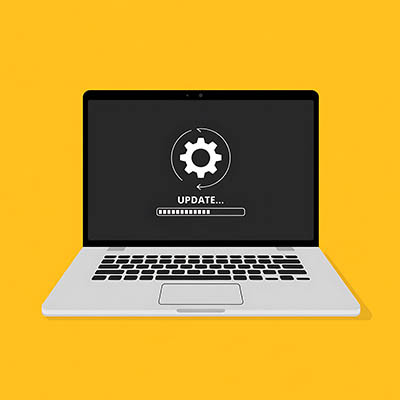
We’ve all done it. You’re deep in a project or finally tackling a bloated inbox when that familiar notification slides into view: Updates are available.
You glance at your deadline, hit “Remind Me Later,” and go back to work. You do the same thing the next day, and the day after that. Here’s the reality: every time you click that button, you’re essentially leaving the front door to your business unlocked and walking away.
Network maintenance is frequently neglected because systems often appear functional until they crash and burn. Unfortunately, servers accumulate hardware issues, backups remain unverified for months, and firewalls run outdated firmware containing known vulnerabilities.

It’s easy when things are going well to ignore the annual IT health check, but that doesn’t make it any less important. Today, we’re sharing a 15-point IT infrastructure health check to keep your technology working smoothly so your business can continue operations. We’ll cover everything from zombie software licenses to expired warranties and aging hardware.

For a long time, one of the best practices for phishing prevention has been to pick up the phone and call up the person apparently sending a message. Unfortunately, in some cases, phone calls are now being exploited.
Now, AI enables scammers to mimic the voices of the people they impersonate through voice cloning. As a result, it is more important than ever to verify who you are talking to before sharing any sensitive information.
Imagine one of your employees receives a phone call from someone who sounds just like you. Would they be able to distinguish this deepfake from the genuine article? If you cannot answer this question with an emphatic “yes,” you have some work to do in preparing your team for modern cybersecurity standards.

I’m about to say something that is going to sound weird at first, but stay with me here:
I miss the Nigerian Prince scam.
I know, I know, it’s crazy, but let me tell you why: threats were a lot easier to spot.

The majority of modern cyberattacks begin with some form of user manipulation, usually through phishing messages that trick recipients into acting against their own security. While these can be shared in any form, the most well-known is certainly email.
Let’s review a few warning signs that can help indicate that an email message is, in fact, a phishing scheme.

By now, you’ve likely seen the headlines: AI is no longer a futuristic concept reserved for Silicon Valley giants. From automating customer service to predicting inventory needs, artificial intelligence is becoming the secret sauce for competitive small businesses. There is a catch, however. You can’t simply plug in AI and expect magic to happen. To help you prepare, we’ve put together a comprehensive roadmap to ensure your business is AI-ready.

Viewing technology as a static, one-time purchase is a blueprint for stagnation. Failing to invest consistently in your infrastructure means you aren't just standing still; you are actively falling behind. To remain relevant, organizations must shift their mindset: technology is not a destination, but a continuous journey. This month, we take an in-depth look at how technology can help or hurt.
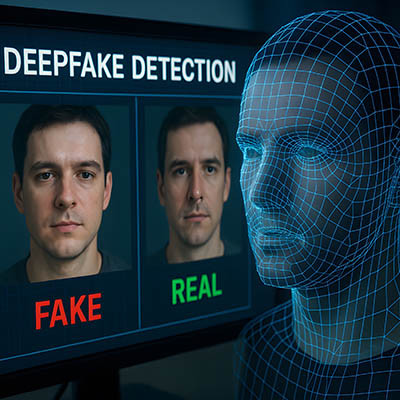
Imagine seeing a video of a world leader announcing a major policy change, or a clip of yourself saying something you never uttered. In the digital age, seeing is no longer believing. This is the reality of deepfakes, a rapidly evolving technology that uses artificial intelligence (AI) to create hyper-realistic but entirely fabricated media. While the technology itself is a marvel of engineering, its potential for misuse is alarming, turning "fake news" into a visceral, high-fidelity experience. Let’s take a look at deepfakes and what is being done to stop them.

If your best defense against cybersecurity threats is to hope your business is too small to target, we’ve got news for you. That’s no cybersecurity strategy, and hackers don’t care how big or small your business is. All they care about is the value your data presents, and let’s be real, that’s a lot.
Does your business still rely on the physical server closet? This space is essentially a physical anchor that requires dedicated cooling, constant hardware monitoring, and a team ready to handle any issues with the machines themselves, making it perhaps the most expensive real estate you own for your business. More agile businesses are forsaking the server closet in favor of a solution that doesn’t require a physical footprint: the cloud.

Nowadays, the era of "checkbox” compliance is officially dead. As regulatory bodies become more tech-savvy—using AI to scan documentation and detect inconsistencies at scale—businesses can no longer rely on manual spreadsheets and periodic audits to stay above water.
Technology has shifted from being a support tool to becoming the strategic infrastructure that keeps a business legal, ethical, and operational. Here is how technology is redefining compliance.
Our network assessment will reveal hidden problems, security vulnerabilities, and other issues lurking on your network.
Learn more about what Omega Technical Solutions can do for your business.
Omega Technical Solutions
5501 Merchant View Square Suite 107
Haymarket, Virginia 20169